
FIP Disease (Feline Infectious Peritonitis) Treatment
General Protocol
- In early diagnosis, the treatment success and survival rate is between 85-90%.
- The survival rate decreases as the diagnosis and treatment process is delayed.
- The recommended treatment period is 90 days. In some cases, it may be decided to extend this period.
- In treatment, FIPGL23 is given orally for 90 days, every 12 hours (morning and evening) according to the cat's weight.
- If you forget or skip the dose, give it immediately.
- Symptoms start to disappear from 10 days onwards. If treatment is stopped assuming the cat has recovered, symptoms will return.
- FIPGL23 should be used for a sufficient period of time to eliminate the virus (at least 90 days) and in adequate doses according to the cat's weight.
- The cat should be isolated from other cats during treatment.
- The cat should be kept in a safe area or in a cage during treatment. It is not possible to apply treatment regularly at the same time to free-roaming cats.
- There is no harm in using antibiotics during treatment.
- Internal and external parasite applications can be made during treatment; there is no harm.
- Neutering should not be performed during treatment.
- Vaccination should not be performed during treatment.
- Immune boosters should be discontinued during treatment.
- Good care and nutrition are very important during treatment.
Symptomatic Treatment
- No vaccination should be done for at least 1 year during and after the treatment process.
- There is no harm in internal and external anti-parasite application and it is necessary if not already done.
- To prevent shortness of breath, the fluid in the chest should be drained, while the fluid in the abdomen should not be drained unless necessary. With diuretic support, abdominal fluid will disappear within 7-10 days.
- If there are upper respiratory tract, urinary tract, and other secondary infections, antibiotics must be used (Zitromax, Sef, Clavamox, Augmentin, Convenia, Clindan, etc.).
- Antibiotics not to be used: Fluoroquinolone group antibiotics such as Baytril, Zeniquin, Orbax, Veraflox.
- Immune boosters such as lysine, beta glucan, interferon, etc., should definitely not be given during treatment.
- Cortisone can be used to reduce and control the immune inflammation response, especially in the wet form. However, since its use will suppress immunity, secondary infections may develop.
- Liver, kidney, vitamin, and mineral support must be given during the treatment process according to blood and biochemistry values.
- Neurological attacks must be controlled. In case of uncontrollable attacks, go to the clinic immediately.
- If the cat has not urinated for more than 1 day despite drinking water, or has not defecated for more than 2 days despite eating, go to the clinic.
- If the cat does not drink water or take fluids, it must receive IV fluid support.
- If there is constant diarrhea, constipation, vomiting, or fever, go to the clinic.
HOW SHOULD I FEED MY CAT WITH FIP?
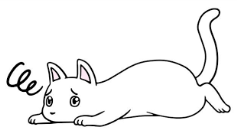
Cats stop eating when they get sick. This is a vicious cycle that must be stopped immediately. Eating is essential for taking the energy they need. Anemia and liver failure develop in cats that do not eat.

Water is crucial for survival. Every cat that cannot drink water deteriorates rapidly. Kidney failure develops in cats that do not drink water and become dehydrated.
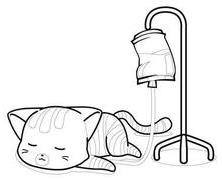
In cases where the cat refuses to drink water, they may need IV fluids at the vet. The fluid should be given at a slow rate.

It should not be forgotten that eating is very important to keep your cat strong while taking FIPGL23 products. You may need to resort to some tricks to make the food attractive.
Encourage your cat to eat small, frequent meals of protein made into a liquid consistency like puree or soup.
You can give ready-made wet food to make your cat happy, but combine it with high-quality dry food ground into powder and mixed with broth for actual nutrition.

Unseasoned bone broth is tasty, nutritious, and high in protein. Any meat protein source will work.
You can feed your cat with meat (poultry, beef, lamb) cooked without adding spices. Cut into small pieces.

Sade cooked fish (Sardines, Haddock) can attract a sick cat. Omega 3 and 6 are necessary.

Boiled eggs are a good source of protein and essential amino acids. Nutritional value increases when cooked.
Kefir and yogurt provide probiotic support and help regulate digestion.